

DJI Phantom 3 Firmware Update – 2026 Full Guide

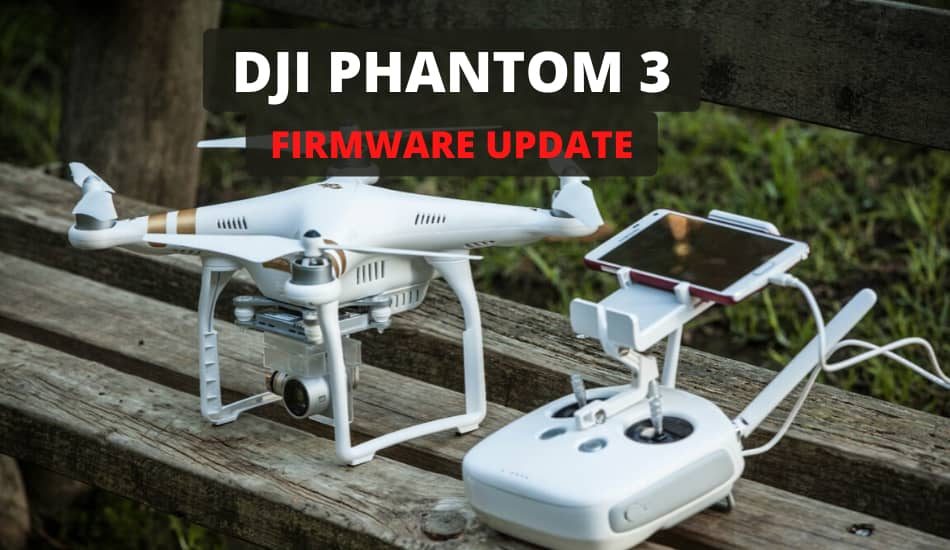
Firmware is an important update in several points of view. Not all drone owners, know how to update their Phantom 3. Firstly, it eliminates the errors of older versions of software, and secondly, it allows you to access the new features of applications for your drone. When you are upgrading Phantom 3 software, you get the access to the new features. Here we will explain to you why, when and how you need to update the firmware on your DJI Phantom 3 for Pro, Advanced, 4K and Standard model. So let’s begin.
How do you update the firmware on a DJI Phantom 3?
On the Pro and Advanced, download the .bin firmware file from DJI’s Download Center, copy it to the root of a microSD card, insert the card into the camera, remove the propellers, and power on the aircraft with at least 50% battery. The update runs automatically and takes up to 25 minutes — listen to the gimbal beeps rather than watching the LEDs. On the Standard and 4K, firmware installs through the DJI GO app instead. Afterwards, repeat the process with each spare battery so they all match, and check the generated TXT file for “result: success”.
Firmware is the software that controls the hardware inside your Phantom 3. Without it the aircraft simply cannot fly, because the flight control software talks to every system on board. Keeping it current fixes known bugs, unlocks features DJI released after your drone shipped, and keeps the aircraft compatible with the app.
The good news is that the process is well documented and fairly forgiving. The bad news is that most guides online skip the details that actually matter — which method your specific model uses, what the gimbal beeps mean, and why you have to repeat the whole thing for every spare battery you own.
This guide covers all of it for the Phantom 3 Professional, Advanced, Standard and 4K, including the remote controller and battery updates, and what to do when an update fails.
Why You Need to Update Phantom 3 Firmware
Firmware is not a full operating system. It performs a limited set of functions, compiled into an image and written to the device’s internal memory. Drones run several of these systems at once, because the aircraft, the camera, the gimbal, the remote controller and even the batteries each carry their own software.
Updating gives you three concrete benefits:
- Bug fixes. Known faults identified since the last release get corrected, and on a flying machine some of those faults have real safety consequences.
- New features. DJI added capabilities to the Phantom 3 throughout its life, including higher video resolutions and improved intelligent flight modes.
- App compatibility. Newer DJI GO versions expect current aircraft firmware. Fall too far behind and features stop working.
There is also a versioning rule worth knowing before you start. If your aircraft is running something very old, you may need to install an intermediate version first rather than jumping straight to the newest file. Read the release notes on the download page before you copy anything to your card.
Which Update Method Does Your Phantom 3 Use?
This is the single most important thing to get right, and it is where most people waste an hour. The four Phantom 3 variants do not all update the same way.
| Model | Aircraft firmware method | Remote controller | Notes |
|---|---|---|---|
| Phantom 3 Professional | microSD card (.bin file) | Separate update, microSD or app | Uses different firmware from the Advanced |
| Phantom 3 Advanced | microSD card (.bin file) | Separate update, microSD or app | Uses different firmware from the Pro |
| Phantom 3 Standard | DJI GO app only | Handled through the app | No manual microSD method |
| Phantom 3 4K | DJI GO app only | Handled through the app | No manual microSD method |
How to Check Your Current Firmware Version
Before updating anything, find out what you are already running. Everything happens inside the DJI GO app.
Finding Your Version
- Power on the Phantom 3 and the remote controller.
- Connect your phone or tablet to the controller.
- Open DJI GO and enter Camera View.
- Tap Settings in the top right corner of the screen.
- Scroll down to About.
You will see the current firmware version for both the aircraft and the remote controller. Write both down before you change anything — if something goes wrong, knowing where you started is valuable.
DJI GO will also notify you automatically when a newer version is available, though on an aircraft this old it is worth checking the download page manually rather than relying on the prompt.
What You Need Before Updating the Firmware
Preparation prevents almost every failed update. Gather these before you begin.
| Requirement | Specification | Why it matters |
|---|---|---|
| Aircraft battery | 50% minimum, ideally fully charged | A shutdown mid-update can corrupt the installation |
| Remote controller battery | 50% minimum | The controller update has the same risk |
| microSD card | 100 MB free, FAT32 or exFAT | Other file systems are not read by the aircraft |
| Card reader or USB cable | Either works | Needed to copy the file to the card |
| Computer with internet | Stable connection | A partial download produces a corrupt file |
| Propellers | Removed | Safety, in case the motors spin |
| Time | Allow a full hour | 25 minutes for the aircraft, plus the RC and each battery |
| Phone setting | Airplane mode on | An incoming call can interrupt an app-based update |
One more rule that should not need saying but does: never run an update while the aircraft is in the air. All of this happens on the ground.
Method 1: Updating Phantom 3 Firmware With a microSD Card
This is the method for the Professional and Advanced, and it is the more reliable of the two because nothing depends on a wireless connection holding steady.

Step-by-Step Procedure
- Download the correct firmware for your exact model from the DJI Download Center. You will get a ZIP containing a .bin file.
- Unzip it and copy the .bin file to the root of the microSD card — not inside any folder.
- Make sure it is the only firmware file on the card. Two .bin files will confuse the aircraft.
- Remove the propellers.
- Insert the card into the microSD slot on the camera.
- Power on the aircraft. The update starts automatically. Do not press anything.
- Wait up to 25 minutes. Listen to the gimbal beeps, described in the next section.
- Restart the Phantom 3 manually once the update completes.
- Verify the result. Remove the card and open the TXT file the aircraft generated. The last line should read “result: success”.
That TXT file is the part most guides never mention, and it is the only definitive confirmation you get. Beeps and lights tell you the process finished; the TXT file tells you it finished correctly.
Phantom 3 Firmware Beep and LED Reference
During the update the aircraft communicates almost entirely through sound. Ignore the LED indicators on other modules — they do not reflect firmware progress and will mislead you.
| Gimbal sound | Pattern | What it means | What to do |
|---|---|---|---|
| Steady single beeps | D-D-D-D | Ready to update | Wait, do not touch anything |
| Fast repeating beeps | DDDD-DDDD | Update in progress | Wait patiently, this is the long part |
| Slow double beep | D—DD | Update complete | Restart the aircraft manually |
| Long continuous beep | D—— | Update failed | Restart, automatic repair begins |
| Camera LED colour | Meaning |
|---|---|
| Flashing green then red | Firmware is still updating |
| Solid green | Update completed successfully |
| Solid red | Update failed |
If you hear the long failure beep, restart the aircraft and the automatic repair process begins on its own. The process is done when that long beeping stops.
Method 2: Updating Phantom 3 Firmware Through the DJI GO App
This is the required method for the Standard and 4K, and an alternative for the Pro and Advanced.

App Update Procedure
- Power on the Phantom 3 and the remote controller.
- Connect your mobile device to the internet and open DJI GO.
- Tap the New firmware update is available notification.
- Tap Download Now and wait for the progress bar to finish.
- Switch your device’s Wi-Fi over to the aircraft or controller network.
- Re-open DJI GO and tap Start Upgrade.
- Wait for the installation progress bar to complete.
- Tap Complete, then restart the Phantom 3.
The Wi-Fi switch in step five catches people out constantly. The download needs the internet; the installation needs the drone. They are two different networks and you have to change between them at the right moment.
How to Update the Phantom 3 Remote Controller Firmware
The controller carries its own firmware and needs updating separately on the Pro and Advanced. Skipping it causes mismatches, and some features only activate once both aircraft and controller are current.

Before you start: have the latest DJI GO installed, the controller charged, the aircraft switched off, a stable internet connection, and at least 100 MB free on your mobile device.
Option 1: microSD card
Controller Update via Card Reader
- Confirm the controller has at least 50% battery.
- The controller firmware is included in the package downloaded from DJI.
- Insert the microSD card into a card reader and plug the reader into the controller’s USB port.
- Power on the controller and wait about 20 seconds. The update starts automatically.
- Blue status LED with fast beeping (DDDD-DDDD) means the update is running.
- Green status LED with slow beeping (D—DD) means it finished.
- Restart the controller. Silence on restart confirms it is done.
If the status LED goes red and there is no sound, the update failed. Restart the controller, wait five minutes, then restart it again. As with the aircraft, the TXT file on the card gives you the definitive answer.
Option 2: DJI GO app

Controller Update via App
- Connect the controller to your mobile device with the USB cable.
- Power on the controller and open DJI GO.
- Tap the Flight Status bar at the top of the screen.
- Tap Overall Status and look for the “Upgrade Required” message.
- Tap Download Firmware.
- When the download finishes, tap Start to upgrade.
- The controller beeps and its LED flashes blue while updating.
- A solid green LED means the process is complete.
Do Not Forget the Battery Firmware
Every Intelligent Flight Battery carries its own firmware, and this is the step almost everyone misses.
If you own several batteries, each one needs updating individually. Once the aircraft update is complete, swap in the next battery and run the process again. The aircraft firmware will not reinstall — it is already current — but that battery will receive its software update. Repeat for every pack you own.
Batteries left on old firmware can cause connection warnings, inaccurate charge readings, and in some cases refuse to arm the aircraft at all. If one of your batteries behaves differently from the others, mismatched firmware is the first thing to check.
Troubleshooting a Failed Phantom 3 Firmware Update
| Problem | Likely cause | Fix |
|---|---|---|
| Long beep, update failed | Corrupt file, low battery or card fault | Restart for automatic repair, then re-download the firmware |
| Update never starts | File in a folder instead of the card root | Move the .bin file to the top level of the card |
| Aircraft ignores the card | Wrong file system | Reformat as FAT32 or exFAT, ideally in the camera itself |
| Repeated failures on one card | Failing or slow microSD card | Try a different card, this is a common culprit |
| TXT file does not say success | Installation did not complete | Re-run the whole process, do not fly on it |
| Cannot read the ZIP after download | The download gave you the .bin directly | If you already have a .bin file, no unzipping is needed |
| Controller stops connecting after update | Aircraft and controller are out of sync | Re-link the controller to the aircraft |
| App update stalls partway | Wi-Fi switched at the wrong moment | Restart both, use the microSD method instead if possible |
If the controller will not reconnect after an update, that is a linking problem rather than a firmware problem. Our guide on fixing Phantom 3 RC signal loss covers the re-linking procedure in detail.
Where to Download Phantom 3 Firmware
Only ever download firmware from DJI directly. Files from forums and mirror sites are a genuine risk on a device that flies.
Official DJI Download Pages
Each firmware file carries a version number in its name, and the highest number is normally the newest. DJI publishes release notes alongside every version listing what changed, so you can see exactly what a given update fixes before installing it.
One point about 2026: DJI ended official support for the Phantom 3 range in January 2023. The Download Center still hosts the files, but no new firmware is being developed, and the DJI GO app that this aircraft depends on can be awkward to install on current phones. Many owners keep an older tablet dedicated to the drone for exactly this reason.
Tips and Mistakes to Avoid
Where Firmware Updates Go Wrong
- Leaving more than one firmware file on the card. Check before you start. The aircraft will not choose for you.
- Downloading the wrong model’s firmware. Pro and Advanced use different files despite looking the same.
- Using an unsupported file system. Only FAT32 and exFAT are read reliably.
- Starting with a low battery. 50% is the floor for both aircraft and controller.
- Letting a phone call interrupt the process. Airplane mode before you begin.
- Forgetting the spare batteries. Each pack needs its own update run.
- Skipping the controller. Aircraft and controller firmware should always match.
- Trusting the beeps alone. Open the TXT file and confirm “result: success”.
- Flying immediately afterwards. Restart, verify, recalibrate, then a short low hover before any real flight.
Done properly, the whole sequence — aircraft, controller, and every battery — takes about an hour once a year on an aircraft this mature. That is a small price for keeping a drone flying safely and predictably.
Frequently Asked Questions
The aircraft update takes up to 25 minutes. Allow a full hour for everything, since you also need to update the remote controller and then repeat the process for each spare battery you own.
The .bin file goes on the root of the card, meaning the top level rather than inside any folder. Make sure it is the only firmware file present, because two .bin files on one card will cause the update to fail.
No. The Standard and 4K install firmware exclusively through the DJI GO app. Only the Professional and Advanced use the manual microSD card method, and those two models also use different firmware files from each other.
Steady single beeps (D-D-D-D) mean ready to update. Fast repeating beeps (DDDD-DDDD) mean the update is running. A slow double beep (D—DD) means it finished. A long continuous beep (D——) means it failed, and restarting starts the automatic repair.
Remove the microSD card and open the TXT file the aircraft generated during the update. The last line should read “result: success”. Beeps and LEDs tell you the process ended, but only that file confirms it completed correctly.
Yes. Each Intelligent Flight Battery carries its own firmware. After the aircraft update completes, swap in the next battery and run the process again. The aircraft firmware will not reinstall, but that battery receives its update.
The usual causes are a corrupt download, a battery below 50%, the file sitting in a folder rather than the card root, or a card formatted to something other than FAT32 or exFAT. A failing microSD card is also a very common culprit, so try a different one.
From DJI’s Download Center, which still hosts the files for the Professional, Advanced and Standard. DJI ended official support for the Phantom 3 range in January 2023, so no new firmware is being developed, but the existing versions remain available. Never download firmware from forums or mirror sites.
Yes. A firmware update is one of the standard triggers for recalibration, because updates can reset or change how sensor data is interpreted. Run an IMU calibration before your next flight, then test with a short low hover before flying properly.
That is usually a linking issue rather than a firmware fault. Re-link the remote controller to the aircraft, and confirm both are running matching firmware versions by checking Settings then About in the DJI GO app.
Related Article: 5 Ways To Fix DJI Phantom 3 RC Signal Lost
